Be yourself; Everyone else is already taken.
— Oscar Wilde.
This is the first post on my new blog. I’m just getting this new blog going, so stay tuned for more. Subscribe below to get notified when I post new updates.
Be yourself; Everyone else is already taken.
— Oscar Wilde.
This is the first post on my new blog. I’m just getting this new blog going, so stay tuned for more. Subscribe below to get notified when I post new updates.
Business Case – “The Floating Island”
“Saving our planet, lifting people out of poverty, advancing economic growth… these are on and the same fight. We must connect the dots between climate change, water scarcity, energy shortages, global health, food security and women’s empowerment. Solutions to one problem must be solutions for all.” –Ban Ki-moon
Welcome back to another edition of Ecological Engineering Talk. Today I would like us to take on a three scenario journey. To kick off (drum roll please).
Scenario 1) Man (lets call him Jack) in the eastern states of Australia goes to the toilet has a pee and is about to flush when he remembers that we are in the middle of a drought and the jingle “if it’s yellow let it mellow applies”.
Scenario 2) Wife Melinda in India walks over 1km with a 2 litre vase on her head to collect water from the only clean lake within the ascribed radius.
Scenario 3) Daughter Cindy has to work an extra job on weekends due to the increasing cost of the water bill for her household.
Now I ask the most obvious question… What do these three scenario’s have in common? Had your moment? Great! The answer is WATER! In all of these scenarios we have the common issue of water being available. Whether its through accessibility or the economical cost it all comes back to the same problem. Now I will open this blog with a question. What does having access to and affordable water mean to you?
What is the problem of water quality and scarcity and why should I care?
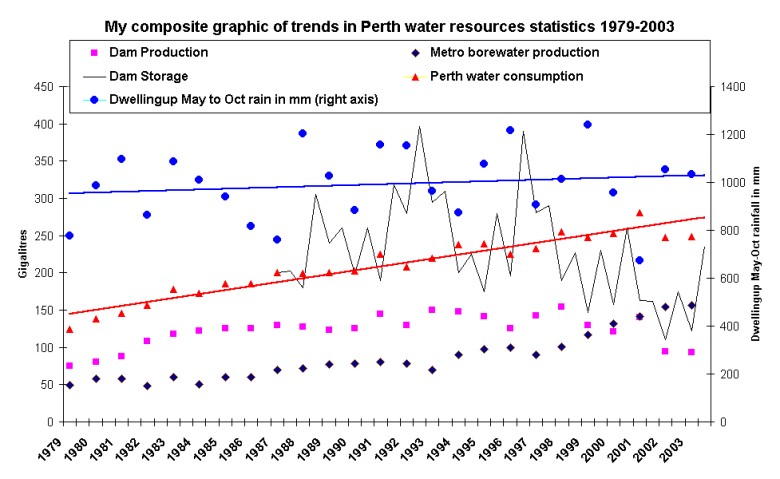
In the past (say 1970’s) the issue of water scarcity might have involved a conversation a little like this – “So mate what do you think about the water levels in the Dwelling up dam?” The response might look like this – “Are you high mate? Why would I care? There’s plenty of water in that dam!” Now this argument may have some prudent points, as the rainfall trend between 1979-2003 seem to be flat if not slightly increasing (see image below).
However, if we were to have that same conversation with what we know now about the supply of water being met with a significantly higher consumption rate (nearly doubled since 1979) we might be alarmed. How can we flatten the water consumption when the population is increasing? I really wish this was an isolated case; however, some sobering facts come to light about water!
Numero Uno: The annual cost of water shortages in Australia’s economy equates to $323 Billion dollars! To put a little more flare and context into the argument lets consider the fact that a 2 Trillion dollar business called the global beverage business, which relies on?! You guessed it water!
Numero Dos: According to World Vision 844 million people lack access to clean water. To put that into context that’s nearly 1/7th of the worlds population!
Numero Tres: The World Health Organisation (WHO) sites that 829,000 people are estimated to die from diarrhoea as a result of unclean drinking water each yet. A further study by WHO found that in 2017 alone 220 million people required treatment for schistosomiasis (a chronic disease caused from parasites found in infested water).
The third point (Tres) is actually a problem that one of the richest men in the world (Bill Gates) is trying to tackle. So if a smart businessman like himself see’s the value why can’t we? After all, just in those three examples we can see: health, economy and society brought into a problematic reality.
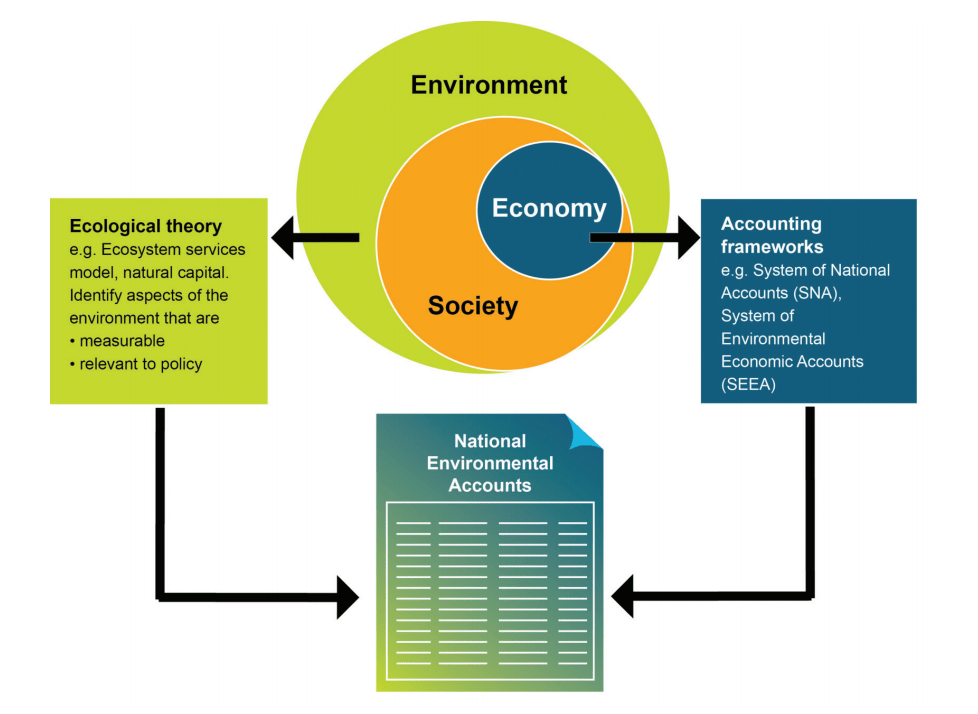
So to sum this all up I would like to throw another word into the equation which covers what was discussed above and more, “Environmental Capital”!
Environmental Capital and it’s Benefits
According to an article written by Newson and Chalk (2004), to implement sustainable development three main elements need to be considered, being: ecosystem understanding (including indigenous knowledge), economic evaluation of environmental assets and widespread participation. So this brings me to my point just what is Environmental Capital? Well, if we use its formal definition we find that it is the countries total renewable and non-renewable resources found through Natural Capital (Environmental Assets). To formalize all of this it is seen that Natural capital (which interchanges with Environmental Capital) is all our natural resources which the Earth provides which has an assigned financial value. So just what are the benefits of having Environmental Capital?
Well a great example I found on this was from an article written by Clarkson and Richardson (2004), where their studies unveil from a sample of companies an interesting discovery. It found that through capital expenditure utilized in protecting the environmental (i.e. reducing pollution which links to Natural/Environmental Capital) over a long term period had financial benefits not shared where high polluting firms did not.
Speaking of Benefits… what about the importance of Environmental Capital in relation to SDG’s? Well as previously mentioned in my other blog, SDG’s are the goals we set to combat the issues of Social, Economic and Environmental Issues which are represented from SDG 1 through to 17. Since water and the sun provide the basis of Energy for life on the planet it would be remiss not to acknowledge the goals set forth by the SDG’s. However, the biggest issue and the beneficiary, if Environmental capital is invested in: is SDG 2 – which aims at ending world hunger, achieving food security and improved nutrition which can only be truly achieved through? You guessed it, clean water.
Introducing the business case of the Floating Island
The Floating island was an idea that initially was developed by a Mr Bruce Kania back in 1999. He thought that in the US there had to be a better approach to improving the poor water quality particularly since his dogs like to play in the water bodies.
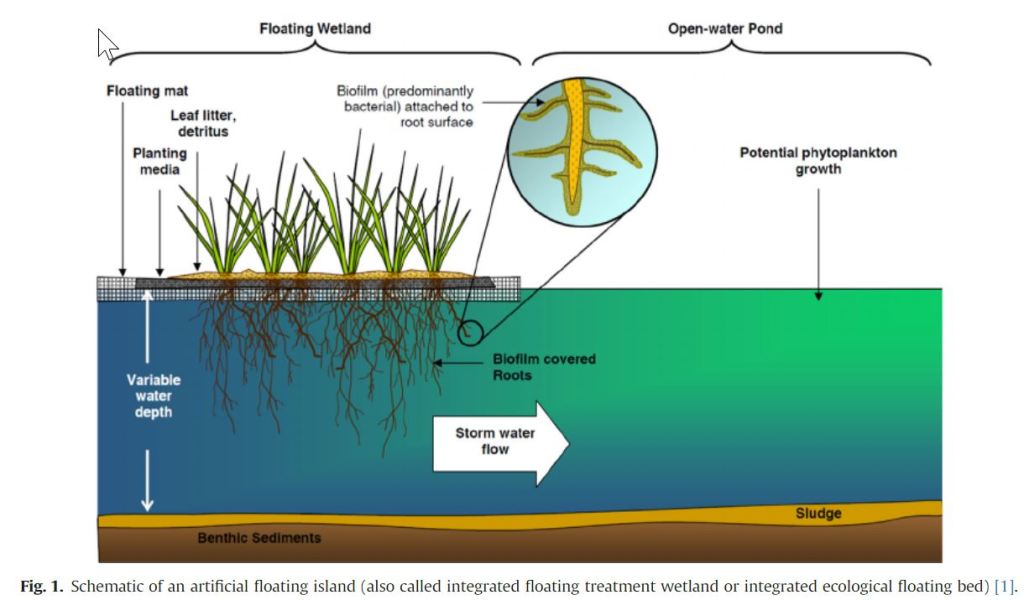
Now that I have informed you of its origins, what about its benefits? Well two of the main benefits of the Floating Island are the improved water quality and diverse habitat. This is done through the use of plant root systems which can effectively break down stratified water bodies into homogenized water sources.
A study by Lu, Ku and Change (2015) supports this assertion when their results indicated a overall improvement of water quality and a reduction of Phosphates as well as Nitrogen (which is harmful to humans at very high levels) and chemical oxygen demand.
The other important study is the relationship between the floating island and the environment. A paper published by Yeh et al. (2014), discusses the positive relationship that is built within ponds, lake and reservoirs where storm water treatment is tackled by the use of Floating islands where the root system soaks up the harmful bacteria as nutrients. This allows for livestock and other ecological lifeforms previously deterred by water bodies due to pollutive activities to return to the area which ties into the concept of replenishing our Environmental Capital.
Social, Economical and Environmental Benefits of a Floating Island
As previously mentioned there are two main issues facing society, being: Water Scarcity and Water Quality. So this begs the question of how is this all interlinked? Well I’m glad you asked… So I feel in exploring an answer to this, we need to use a little common sense. Clean water is used in a variety of applications, from the fish tank all the way to the isolated lakes found on farms for livestock. Which by the way creates to businesses both large and small of agriculture and pet shops respectively that contribute financially as well as socially to the community benefiting the Economy at large.
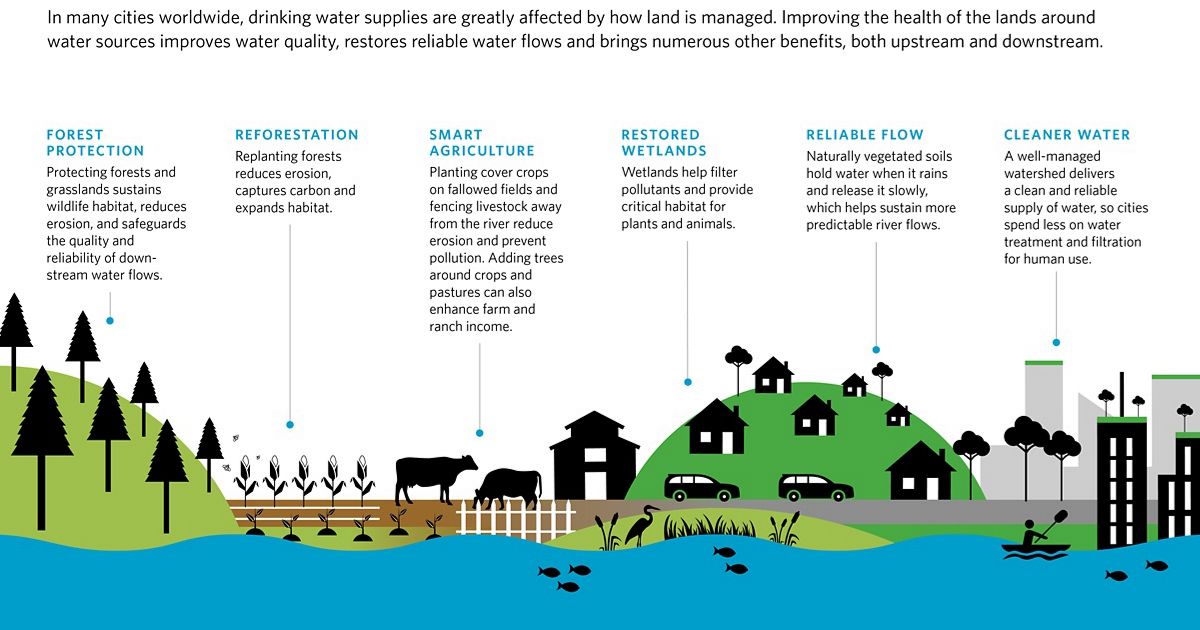
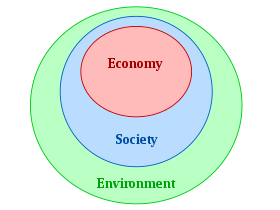
But wait! That’s not all… what about the environment. Well just look around, do you honestly believe that seagulls drink salt water? Or do you believe that the a freshwater lobster lives in a polluted water body? The web of connections that water creates transcends just one aspect of the three spheres of live (Economy, Society and Environment). Which brings me to my main point, why bother with Floating Islands? My response is forthcoming in saying… why not? We have an increasing issue of scarcity and we are using nature which doesn’t require a DC (power source to run which create increased water bill costs), can accommodate for changes in temperature and weather patterns which acts as a water purifier $$FOR FREE$$, hell we should be shouting this solution from the roof tops!
I mean after all India, that’s right India is looking heavily into floating islands to combat its issue of polluted water bodies and not just to decrease algae, Nitrogen and Phosphate. So if we can harmonize an idea like this for livestock and fish farms why not make it applicable for us too?
The Floating Island Checklist against SDG’s and Native and Traditional Cultural Learnings (NTCL)
Through all of this talk about business cases, profits, cost reduction and Environmental Capital we still need to acknowledge in more depth the SDG’s and NTCL’s. Through looking at the flow on effects of utilizing Floating island we can gain a perception on the impact we are having specifically with SDG’s. Specifically following on from SDG 2, we can also see that other sustainable goals are being achieved, and so I have decided to provide a summary on some of the ones that stood out to me:
SDG 3: Good-Health and Wellbeing – Floating islands are creating clean water and reducing the effects of dysentery (no shit right?)
SDG 6: Clean Water and Sanitation – Floating islands primary purpose it to reduce the pollutants in water to create homogenous water bodies
SDG 9: Industry, Innovation and Infastructure – By using Floating islands I believe we are creating innovation for the Industries (both agriculture and business in general) in the form of generating Environmental and financial Capital
These are just three out of the many SDG’s a Floating Island Ecological Engineering project would address; however, that is not to say there aren’t many others that are addressed to benefit the environment…. The last point I’d like to make on SDG’s is how using the business case for a Floating island would also address the issues of meeting a complex demand by nature by using nature as the engineering tool. Furthermore nature is adaptive and if preserved growing and resilient, so say goodbye to the issues of meeting the demands of a growing population. If we can create more water bodies using this Ecological Design who’s to say we can create water more water bodies with floating islands to benefit environmental and humanitarian demands?
This brings me on to my next point of NTCL and how the Floating Island can achieve the ideals set forth. In my previous blog I referred to Professor Walley and his interpretation on Indigenous/Native Cultural perceptions on the wildlife and their role as being selfless conservators. So to check whether I believe these concepts are addressed I decided to summarize as follows:
So by using a plant based solution to man made issues, we can see a balancing of the scales so to speak. We are creating biodiversity and furthermore creating a side benefit/partnership between the environment and human resources/natural capital. However, it should be noted that the later point does not exactly align with NTCL its affect and outcomes do.
Conclusion
The aims of this blog were to explore not only a business case for a Floating Island for purifying water bodies but to also outline the important relationship the ecological and environmental sector plays in our economy. There is a strong link between the areas of Economy (i.e. Bills, Financial Growth), Environment (i.e. Ecological, Plant Diversification) and Society (i.e. health, tourism) which is transcended by any one area the topic of water quality and scarcity. Through introducing an plant based (green solution) to a pollution problem we can begin to create new opportunities to help the wildlife but also the communities around the world. With that in mind I go back to my earlier question and replace it with another. Would you like a Floating Island?
#FloatingGreenBusinessCases
References:
Clarkson, P. M., Li, Y., & Richardson, G. D. (2004). The market valuation of environmental capital expenditures by pulp and paper comapnies. The Accounting Review, 79(2), 329-353. Retrieved from https://search-proquest-com.ezproxy.library.uwa.edu.au/docview/218551678?accountid=14681
Lu, Hsiao-Ling, Chen-Ruei Ku, and Yuan-Hsiou Chang. “Water Quality Improvement with Artificial Floating Islands.” Ecological Lu, H., Ku, C., & Chang, Y. (2015). Water quality improvement with artificial floating islands. Ecological Engineering, 74, 371–375. https://doi.org/10.1016/j.ecoleng.2014.11.013
Malcolm Newson & Liz Chalk (2004) Environmental capital: an information core to public participation in strategic and operational decisions—the example of river ‘Best Practice’ projects, Journal of Environmental Planning and Management, 47:6, 899-920, DOI: 10.1080/0964056042000284893
Yeh, Gary & Yeh, Pulin & Chang, Yuan-Hsiou. (2015). Artificial floating islands for environmental improvement. Renewable and Sustainable Energy Reviews. 47. 10.1016/j.rser.2015.03.090.
CANT WE ALL JUST GET ALONG?
“Environmental spending creates jobs in engineering, manufacturing, construction, materials, operations and maintenance.” – Keith Ellison

I must admit, this was a real cranium scratcher. Imagine for a minute, that two fighters came to the ring. One fighter represented a Mining Engineering Firm and the other represented Mother Nature. Who do you think would win?
Let me break it down even further, lets say that the Mining Engineering Firm boxer has had money thrown at him to train, has designed a system that creates profits through sponsorship whilst Mother Nature representative has only had water, sunlight and food scraps to live off. Would that change your betting on sports bet?
I’ll add another scenario what if this wasn’t an arranged fight but a street fight. In order to protect each incoming blow from occurring a bystander representing ‘compromise’ came in to the foray of shouts and prelude to try and talk each fighter down. So big strong Mining Engineering firm guy has backing and sponsorship and Mother Nature doesn’t, why should he want to back down?
What if I was to tell you the Mining Engineering firm boxer was a metaphor for capitalism and Mother Nature meant the environment and ecosystems around the world? The compromise that would be left needs a way to be able to coexist in a way that neither side had to perish, which brings me to the concept of Ecological Engineering.
What is Ecological Engineering???
Ecological Engineering defines an exciting relationship that exists between Engineering Design and Nature. It explores how we can use Engineering Design in a respectful way that can both mutually benefit the Environment but also the Engineers project itself.
To expand on this further Engineering design is morally done to benefit human welfare; however, this sometimes interferes with the local Environment and therefore it is encumbered upon the designers to create sustainable systems. It is also a crucial development in the field of engineering as conventional energy sources diminish and the dependency on the ecosystems services is increased (William, J. Mitsch, 2012). So ultimately like my format for study, principles will need to be adopted so that Ecological Engineering isn’t just a buzzword, but rather a set of strategies and goals set forth to ensure sustainable practices are adopted.
Ecological Engineering Principles
Ecological Principles are a set of guidelines on how to create an engineering design that caters for both the aspect of human welfare but also the Environmental and Ecological Systems that may be directly or indirectly impacted by activities during and after design is completed which is important to preserve both design and habitat. These designs could include things like: waste water facilities, water supply stations – which are considered essential facilities for promoting sanitation and overall human health (and importantly mine). Principles used in designs are broken up into five areas that are guiding for practicing ecological engineering with the underlying requirement that for a successful project in this area; both the organism (including humans) relationships are observed but also it integrates the well-being of both human society and the natural environment with benefits for both according to Scott D Bergen et al (2016).
Measuring the success/failure of Ecological Engineering Principles
A journal report on Restoration for ecological systems describes the process of restoration as, “the process of assisting the recovery of an ecosystem that has been degraded, damaged or destroyed”. So with this definition in mind, we have a sort of warning statement that if we want to avoid further costs (both financially and Environmentally) we have to ensure our design doesn’t follow the three D’s (degrade, damage or destroy).
In my opunion (yeah i didn’t misspell) a great example of this idea I found through an Engineering Company, where they pitch the idea in one of their blogs which looks at creating forest strategy for urban environments. This is done in order to combat the issue of climate change, population growth and urban heating.
So in these two examples of literature it can be clear to see that measures can already be formulated. If we want to see a measure of success or failure we need to look around us before a project and after. What have we impacted? In one instance we could look at the biodiversity of the ecosystem. In another we can look at the temperature changes in a localised area where restorative planting and watering has occurred. So we can already see that we can have our cake and eat it too (and both boxers escape injury).
Engineering Ecosystem Management
The common view I have observed from my time working as an engineer, is that when it comes to management on the issues of the Ecosystems, liabilities seem to run and stop at the following conversation, “avoid cutting that tree down its protected”. Not exactly robust or thought provoking on the other issues of micro-organisms, plant diversification and other terms I’ve heard relating to the environment. It’s important especially in an engineering environment that a top-down approach is adopted to create the belief/culture that the environment is just as important as the project that is being worked on rather than a nuisance to tick off on a checklist.
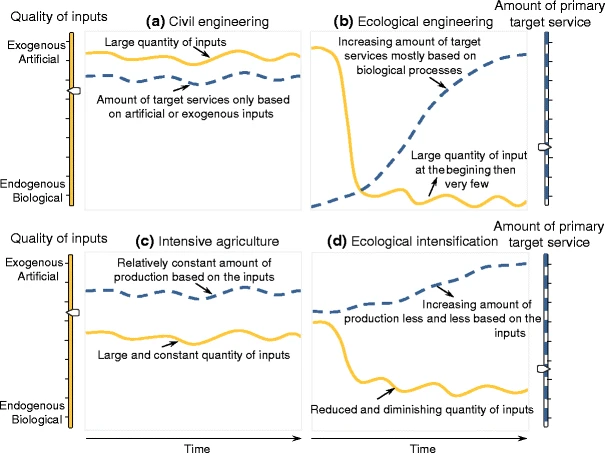
I wont lie, this next bit blew my mind. In Engineering design a commonality for management and designers is the thought provoking questions of, “what services do we need?” That has been a common question in design with the answers often ranging from MRWA, Dial before you dig, Water Corp etc. These services often cost with management and create headaches over rules and regulations. But lets just imagine for a moment? Had your moment… Great! That we can use the environment to do those services for us and benefit?! In fact Freddy Rey et al. (2015) describes a fascinating assertion that contrary to Civil Engineering practices, Biological Services (harnessed by Ecological Engineering) will continue to grow even in the long run.
Integrating Ecological Engineering Principles Into Design
So this is a shoutout back to the five principles of Ecological Engineering which are discussed in depth by Scott D. Bergen et al. (2001). I wont go into depth on what the principles are but a few points I’ve thought of whilst reading them have come to mind.
The first principle which ironically is entitled: design consistent with ecological principles, makes me think of the concepts of engineering resilience and ecological resilience (again discussed by Scott D. Bergen et al.) These principles could be kept in mind for the designer as one in the same for the project by asking the question of, “how far can I push this design before disruption to its performance and the local ecological environment is disrupted negatively?” I found a company Mannvit that does a great job of displaying this on their company header for buildings.
The second Principle: Design for site-specific context, I believe can be summarised into three questions 1) What is here? 2) What will nature let us do here? and 3) What can the ecology here help us do here?. Out of the three questions I am of the opinion the first question is the most important. The CWD group employs Environmental engineers that ask these questions constantly of fusing ecology with their designs.
Principles 3 and 4 I have combined (just for fun): Maintain Independence in design and design functional requirements and designing for efficiency in energy. This for me spells the importance of where possible keeping your design simple as nature can be anything but, so when looking for assistance from nature in helping your design work measures including efficiency can be unpredictable if not chaotic. The Engineering company ARUP does I feel a really great representation on their page when they boast about creating buildings that are efficient with resources whilst also meeting the needs of the environment.
Finally the fifth principle: Acknowledging the values and purposes that motivate design. I believe this speaks to what I previously discussed of creating a design that is both beneficial to human use but also to the ecosystem and environment. I believe the companies I have mentioned above in some way cover all those requirements in their designs.
Native Cultural Awareness and Sustainable Development Goals (SDG’s)
The Aboriginal People of Australia thought of themselves as conservationists of the land and therefore were duty bound to respect the land and wildlife because they were sharing it (i.e. not hunting when animals were feeding etc).
“Aboriginal management regimes typically aimed to maintain the abundance and diversity of food and other resources within the environment and fulfilled goals such as cleaning (burning) the country to make lands accessible” (Russell-Smith et al. 1997, Walsh 2008)
Having listened to Professor Richard Walley (an Aboriginal Elder) my notion of sustainable practices were put to the test. His talk on trigger points and the idea that nature wasn’t there to just serve us humans but also the ecosystem so it was important to respect the populations. An example given was, Aboriginal People didn’t hunt in the morning because it would interfere with the wildlifes feeding times, and they moved around to allow for sustainability of populations of ecosystems and to avoid an negative impact on the habitat. The notion of sustainability it seems it based on a notion of saving the environment for future generations. However, i would argue that is a self-centered view based on the discussion. You see Professor Walley’s Native cultural perceptions made it clear to me that the reasons behind sustainability should be for more than just the betterment of human kind, but of the nature and wildlife as well.
Speaking to the nature and wildlife this brings me to my next point. Sustainable Development goals, which are a set of goals agreed to by the united nations that promotes social well being and the protection of the environment. It wasn’t good enough i felt to look at this through the lenses of a Environmentalist, but rather an engineers perspective. Reading a very interesting article by Shahin Rahimifard and Hand Trollman (2018), they go into great depth the challenges and goals we as engineers should face in the future going forward. That isn’t to say we haven’t made strides in my humble opinion; however, i found two points in this article that really struck a chord. The first is to create complex systems to meet the complex demand of SDG’s (so in that vein i believe we can improve education). The second is for Engineers to challenge themselves to meet the needs of a growing population while minimizing the pressure on earths resources. This last point i believe ties in well to the native culture and SDG’s through the vessel of Engineering.
Conclusion
So by now i feel that i have exhausted both myself and you the reader. So like any great TV saga lets wrap it up. In this blog my aim was to explore the two competing issues that are prevalent in today’s society. The first being boxer A Capitalism (AKA mining engineer firm) and then boxer B (AKA Mother Nature at her finest) and to examine the mediator which i argued is the Ecological Engineer. I felt it important to examine the Ecological Engineers role in society and how this could interlink with future designs by using nature as a partner rather than a nuisance accompanied with red tape (EPA). Further to this, accompanying Engineering design was the motivating factor (or mission statements) of both the SDG’s and Native culture helped to formalize the importance of protecting and considering nature in engineering design. So in reference to my earlier question about the boxers, do you think that it’s a question of who will win but rather what we have to loose?
I shall close this blog with a joke: did you hear about the new ecological engineering initiative about making glass trees for the environment? Yeah it’s effects remain to be seen.
#EcologicalEngineerThePeacemaker
Welcome back to another blog on talkingshitaboutourwaste, today I am going to be discussing an important topic on *drum rolls* social media and how to get the message out there on ecofriendly products that reduce our impact on the wastewater facilities but also the environment at large.
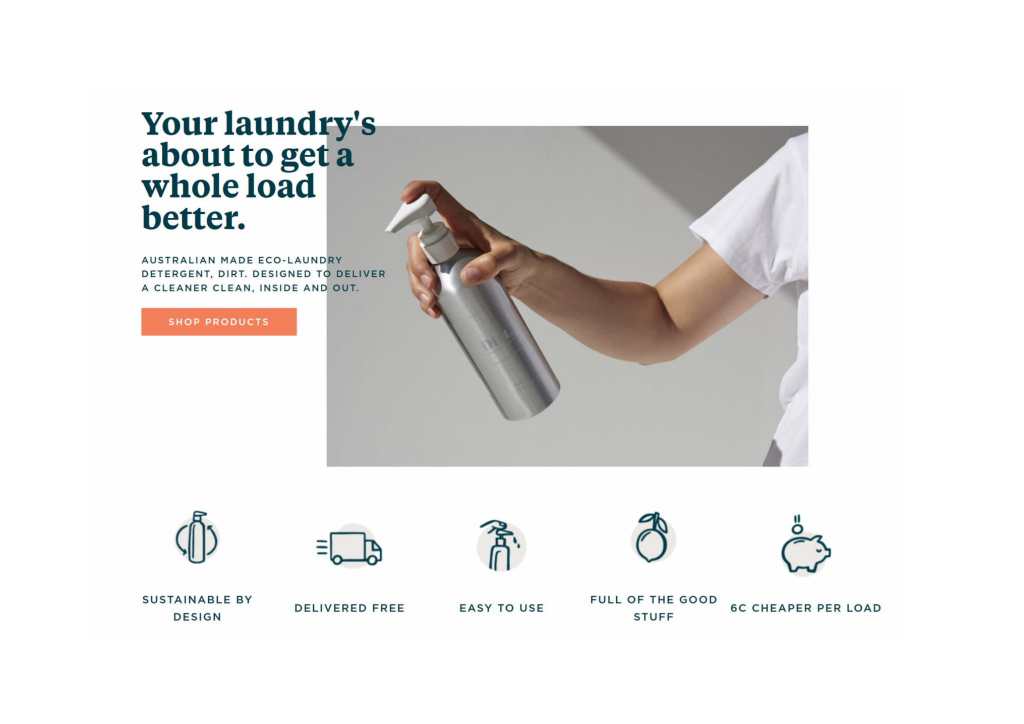
This screenshot of a company in Australia gives a great depiction of what two ecofriendly warriors and a vision can accomplish. The Dirt Company as it is called is a brain child vision of a self confessed ‘Sustainability nerd’ and ‘Technology child’ who’s products are aimed at returns, reusability and repeat customers (wait a second do you hear that?) ding ding ding* that’s the sound of the first Sustainable development goal (SDG) of the day being noted with SDG 11 of industry, innovation and infrastructure being given a polite nod.
“This company really puts itself out there on creating a market that is like that of a circular economy with products you can mail back to them for reuse and products that will last indefinitely all for a low price.”
Another important aspect of this company I would like to add is their ‘impact’ link. In this section they discuss their initiatives on donating 50% of their profits to Ocean clean ups! I am so excited to think about that from a environmental conservation point of view! In addition, there is refill packs, so the community can return their detergent packs that are on for sale reducing the need for plastic waste getting the community in on the excitement of recycling!

Speaking of excitement in recycling to protect our waterways another clever company called ‘No issues’ found online provides yet another example of a company that is dedicated to the sustainability future. They have products that are environmentally friendly through the use of bamboo and sugarcane fibers. Why is this a big deal? Well for one there is the environmental aspect where this company boasts the ‘no tree’ use for its materials. Secondly there is the circular economy aspect, where the production of this material has both renewable resource aspects applying to it as well as the parts that aren’t renewable being 100% biodegradable which falls nicely into our SDG 12 and 13 above.
“The company ‘No issues’ employees bamboo products as bamboo is a fast growing and bountiful resource that is takes only a matter of months to reach full height”
I’ll imagine right now you are rolling your eyes and asking the question, “what does this all have to do with social media and promoting wastewater?” Well looking at this websites media section, I have noted that the owner has turned a green idea into a 2 MILLION dollar idea. Not only this the owner of this company has appeared in business with store outlets like Coles and Woolworths as a University student design concept.
So just looking above using both innovative designs to reduce wastage and looking towards expanding our horizons as just another “save the environment warrior”, we can actually use social media to do 3 important things. (1.) We can use social media to expand the dialogue of our product for not just ecofriendly ideas but ideas in general, (2.) creating a platform for a business where ecofriendly sustainability is not only promoted but a viable option cost wise and (3.) some ideas on face value may seem mundane and boring to the consumer through using websites, and other social media platforms we can create a social community around a product and or idea.
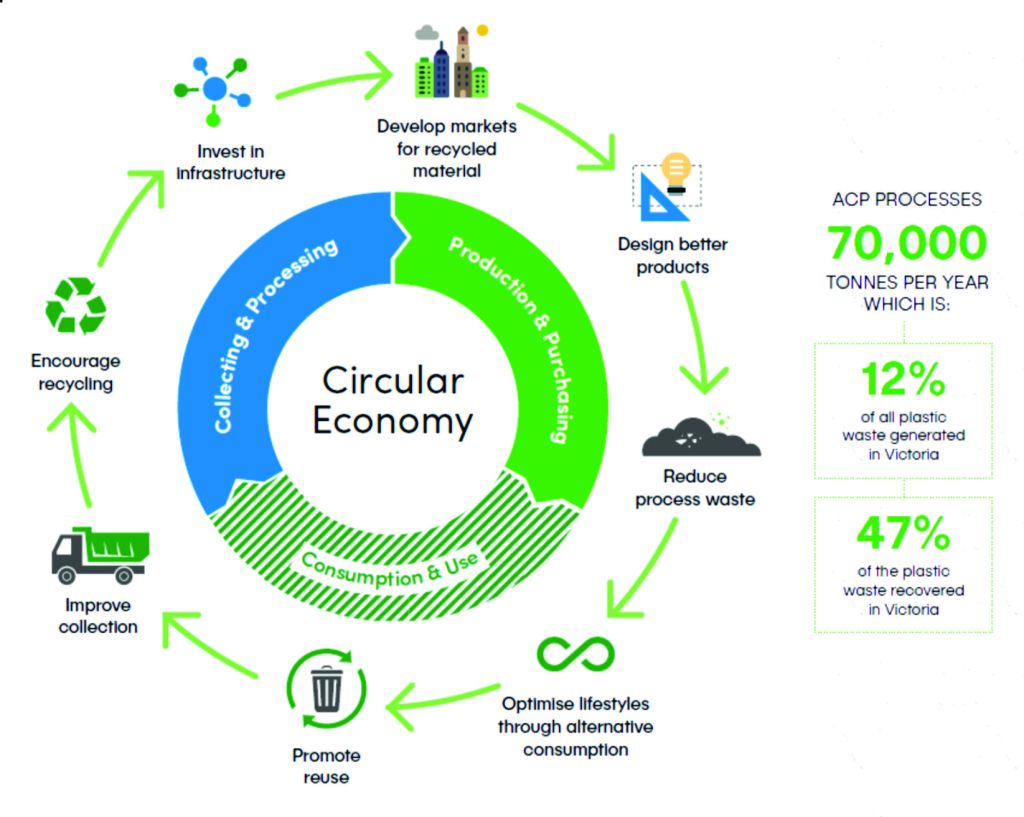
So now I want to move onto anther process to try and bring this full circle (and by that I mean quite literally). We have touched on it previously for the company ‘No issues’ but what does it mean in reality? Well as usual I’m glad you asked. Circular economy as depicted in the graph above looks a system where products that are created can be recycled 100% back to the place where they were manufactured or alternatively recycled in their entirety for other use. Wow a mouthful!
“A circular economy creates, makes and then recycles the components in their entirety for further use. Creating a self perpetuating system where waste or loss of resources does not occur”
How do we create this utopian society? Engagement is one example of where this could happen. The two companies I have listed above are an example of engaging the communities needs and working in partnership with them to return products or at the very least create a product that is biodegradable to protect our waterways.
So looking at this from a micro to a macroeconomic perspective the idea for wastewater innovation is to be clever in the campaigning of the materials. Also look at what the communities need and try and wedge yourself in there. These companies above are two of many start ups. One of the companies ‘No issues’ is a company that boasts over $2million dollars of value. So to say that there isn’t an economy of scale for being green and keen in this market is shortsighted. So I will leave with a lasting thought that media and getting the message out there on local scale that can help perpetuate the message of recycled wastewater which if promoted wide enough can cascade all the way to the global scale.
#mediashit
So welcome back to another addition of wastewater talk (or in my speak shit talking). Today i want to discuss a few things on legislation for a wastewater that ends up on our lakes, rivers and oceans. However, i want to ‘flip the script’ a little and start this from really what i feel is an enraging poster i found on this news article.
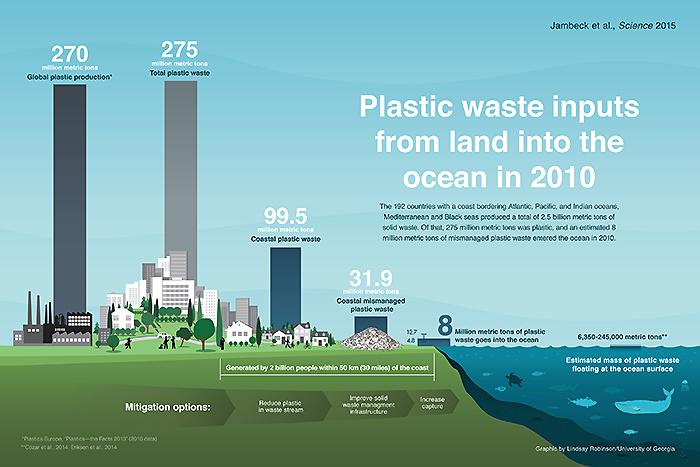
8 MILLION metric tons. Just try to imagine that for a second. That is the equivalent of 74,766 front loaders found on the mines of plastic waste in the ocean that was produced globally in 2010.
“In 2010 approximately 6,350 – 245,000 metric tons of plastic waste was estimated to be floating on the ocean surface!”
So why is this important you ask? Well lets look at Australia’s past and present for water pollution. In 2009 we had an oil leak and spill in the ocean and ocean dumping by both companies and individuals occurred in great numbers until legislation crackdowns in the 1990’s (it still happens even LEGALLY). I could go on but i want to go for a swim in the ocean filled with marine debris that cultivated bacteria that are both foreign and harmful to the marine life.
“With a legal permit ocean dumping still occurs in Australia despite a crackdown on ocean dumping in the 1990’s”
Let’s just examine that for just a moment. LEGAL permit for dumping in the ocean. You know what? That sound just fine and dandy that we can permit that but what exactly are we sending as a message for those of us who want the marine life to be there in the next 50 years and beyond?
There is also a cost impact associated with dumping in Australia. Well if we examine what the life bellow the water brings in revenue its approximately 50 BILLION dollars annually. Also I might add it is projected by the year 2025 that figure will double according to Global Compact Network Australia.
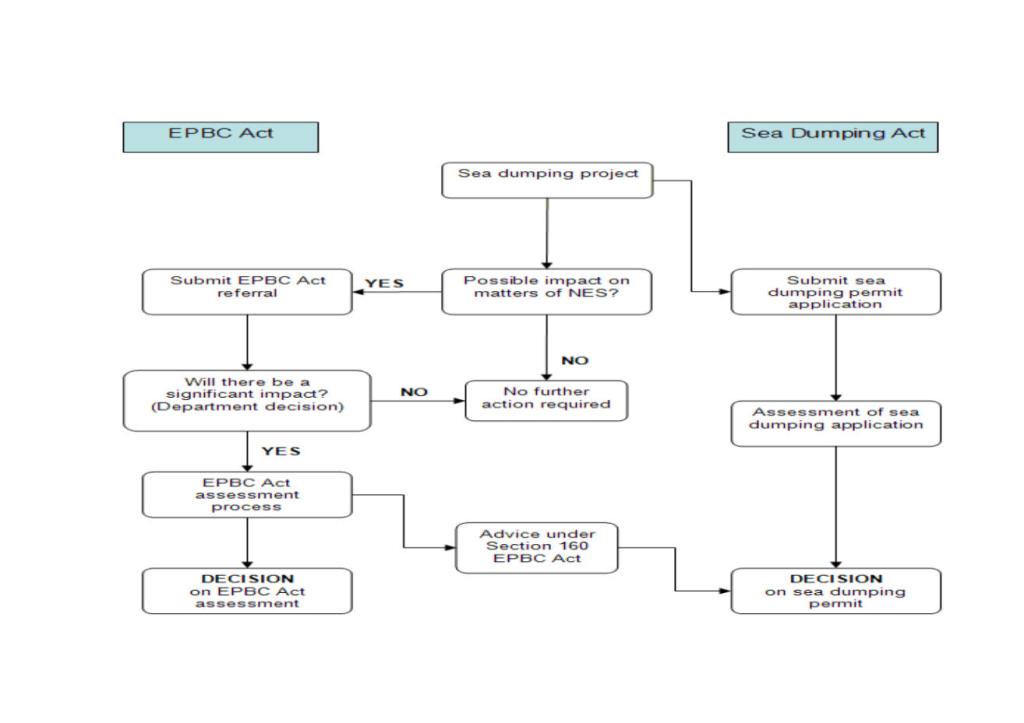
Now we know the problem, how about the legislation that is put in place to safeguard our waterways? As can be seen from the Australian Governments oceans dumping flow chart above there are mechanisms in place to reduce and even eliminate dumping from taking place within the oceans. However, I’d be asking the question of what else is there?
Now that you have had a chance to look at this all encapsulating picture of SDG 14, lets examine some of the important aspects of the Sea dumping legislation. According the department of Environment and Energy the Sea dumping legislation covers areas of: dredging, creation of artificial reefs, dumping from vessels and burials at sea (scatter my ashes). This is one example of legislation there are others that encapsulate land leading to the ocean dumping, acids into our waterways and much, much more.
“Australia has done a big a lot in the means of creating legislation to deter illegal dumping with dredging, preventing harmful chemicals in the water ways but are fines and warnings only one solution?”
Now I’m going to propose another question to you. Will getting a whopping big fine In the mail for putting fertiliser mixed with car soap going down the drain help? Thankfully Germany is here to help, thanks Angela Merkel!

In Germany they have created a business in addition to legislation for wastewater pollution. Using my example above civilians in Germany are not allowed to wash their cars at home but rather at an ecofriendly hub creating a thriving industry. As the old saying goes that you can attract more bees with honey than vinegar. So my proposal is by combining the issues ‘bellow with the water’ and lets say through in some ‘industry, innovation and infrastructure'(SDG 9) why can’t well turn this from a tail of caution to a story of success?
I believe that we can turn legislation on wastewater pollution from just fines, permits and warnings to an opportunity to create legislation whereby doing ‘the right thing’ gets you more than just a pat on the head but rather money in your pocket and possibly a thriving business. I certainly believe that we as a society should be able to recycle waste, invest more in biofuel and create a magnet of opportunity for re-use rather than forgotten waste.
So lets balance the scales on good legislation and positive outlooks for reducing and ultimately eliminating waste that goes into our waterways.
#Legislatethatshitwasteaway
So in my previous blog we discussed what wastewater is exactly. It’s wonderful that we can define wastewater and go through the basics on how to treat it but what about the facilities to make that happen? So lets hit some hard statistics that come straight from the water corporation. Touching on the problem from the previous blog, it is projected that by the year 2060 Western Australia is going to have a shortage of water produced for the public and private industries.
“The rainfall trend projected for 2060 based on previous and current year predicts that the rainfall will generate approximately 50 Gigalitres against the demand of 365 Gigalitres .”
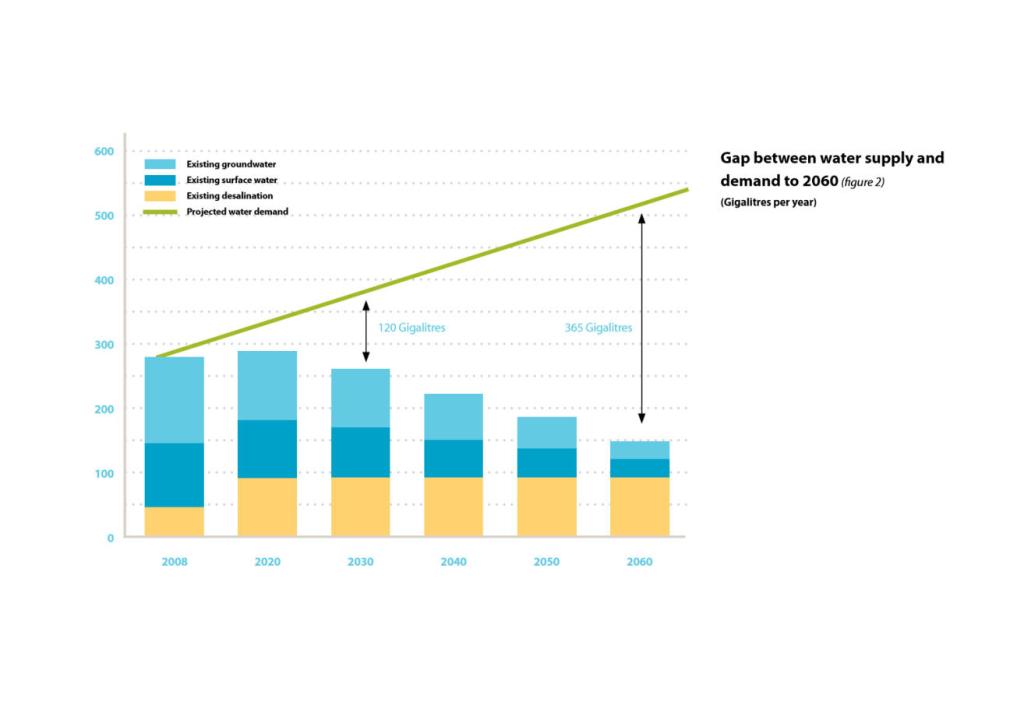
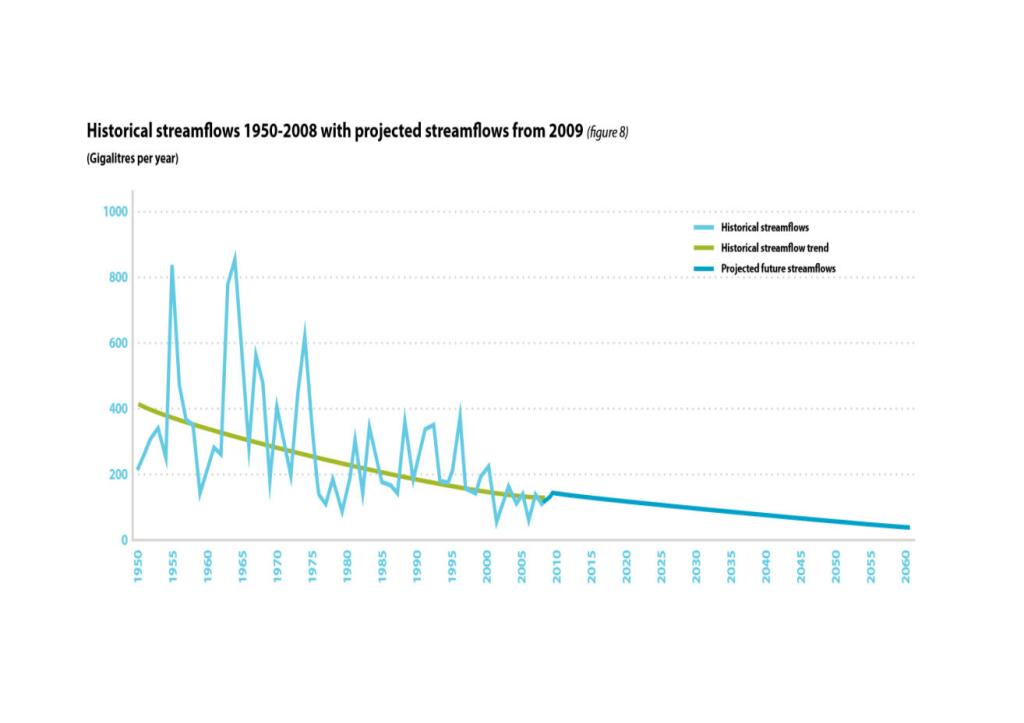
So we start to ask questions of how to meet that massive demand for water when the water corporation projects rainfall to keep decreasing. When looking at the rainfall data between 1911-1979 and finding that there is an average of 378 gigalitres of rain produced compared to todays rainfall average of less than 113 gigalitres we have to ask the question of where it did it all go wrong?
“It is quite alarming to put it mildly that the average rainfall data recorded for the past 100 years has shown a decrease of 70% of water produced. “
Now that we have introduced further the problem of water production we examine the infrastructure that is put in place. Currently it is reported via an interesting talk by Dr Steven Capewell that there is 3 desalination plants on the West Coast.
“The Southern Seawater Desalination plant is reported to be able to produce 100 gigalitres of water per year”.
So what does this mean for sustainability if we examine further what a Desalination plant does for converting sea water to drinking water? Well look at the cost for example. After a little research I’ve found that according to Australian Water Association a large scale desalination plant can produce up too 100 gigalitres per year at $1-4 per kilolitres. I’ll let you do the math but it comes out to approximately 1 Billion dollars a year in energy costs!
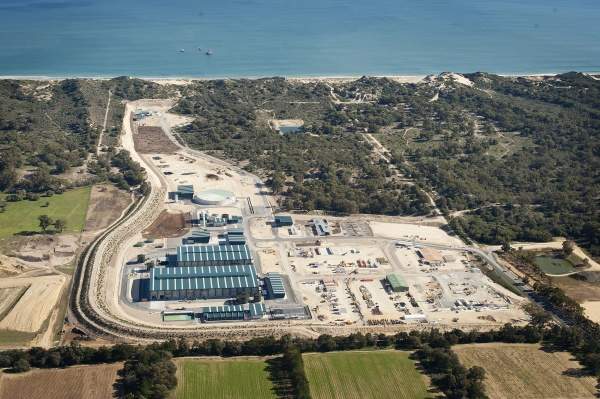
Another confronting statistic that just flew my way was the disproportionate amount of water supplied to urban homes through the use of Desalination plants compared to the recycled water from wastewater.
“In Perth alone there was a total of 96 Mega-liters of water supplied to residential homes compared to 7 Mega-liters” Bureau of Meteorology, National Water Account 2013 Summary, page 13
Imagine for a moment that this issue of water scarcity was similar to that of another resources provided like energy. We all see electricity prices going up don’t we? Yet there are homes that have solar panels on the roof that lower those costs down to manageable levels.
Now lets say that 35% of your yearly electricity came from solar panels that means a reduction of 35% in your power bills. However, if we examine desalination (lets call them western power) to that of your recycled water (lets call them solar panels in your house) we see the percentage difference in production is 27% (29% for desalination to 2% water recycled) in favor of Desalination plants for urban homes, which looks like a world with limited or no houses with solar panels.
So what does this have to do with Sustainable Development goals (SDG) or specifically SDG 9, which tackles the issues of ‘Industry, Innovation and Infrastructure’? Well if we go back to the discussion given by Dr Steven Capewell, it was reported that the water corporation is recognising that it needs to move from a water system that is focused in onto itself (separated) and start inviting the public participation to gather water as a resource for themselves.
“The water corporation is moving away from an integrated isolated infrastructure system to a system that is both integrated and in partnership with that of rural communities to meet water supply demands in the future”.
Going back to the discussion of power generation, in this day and age there is a further incentive to use solar panels to produce power, in that excess power can be sold back to western power. Going forward into the future, couldn’t the idea of selling excess recycled water supply be another method of incentivising the general public to be more water conscious and environmentally friendly?
Personally i believe (this belief was also shared by Dr Steven) that future markets will open up for wastewater facilities to recycle water and control it as a marketable business in the future. This will lead; however, to a system that is more isolated and more focused on the rural communities.
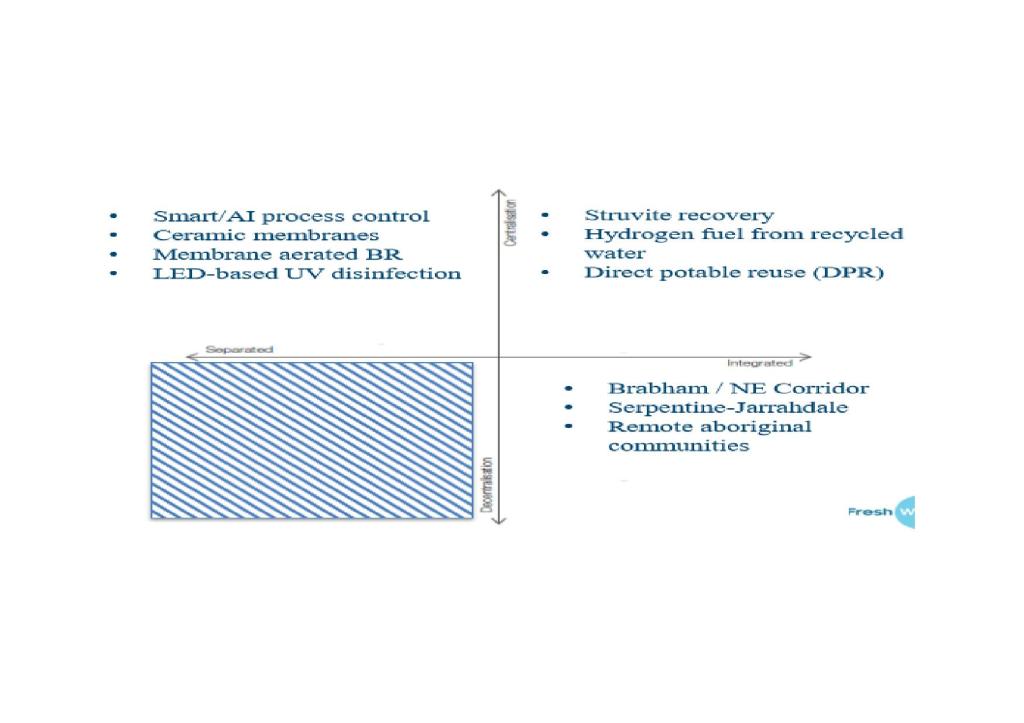
So while water prices increase, there is an opportunity to tap into a relatively abundant resource readily available in wastewater, the question becomes how do we further enhance and disseminate technology to promote the use of wastewater as primary source for urban water usage?
#Build(Y)ourOwnWastewaterFacilities
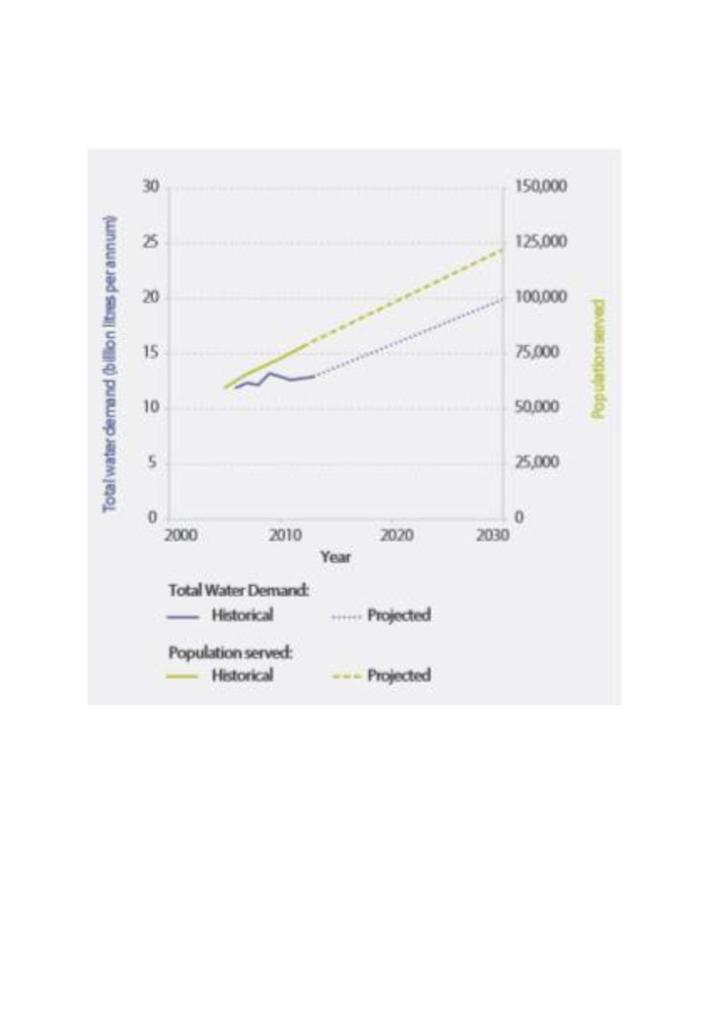
Let’s face facts. When was the last time someone who wasn’t educated in the realms of wastewater actually took the time to ask themselves the following: “Ohh gee I hope that toilet paper doesn’t affect our treatment plant” or “maybe if I pour a bit of fluoride into my toilet bowl it might lower the energy requirement for purifying the water”? Facts are indisputable and in the realm of economics we delve into the basics of supply verses demand of natural resources being what exactly….? You guessed it WATER. With a projected shortfall of 25 BILLION litres per annum of water expected by 2030 reported by the water corporation 2016 final report; we will explore the means we have at our disposal to elevate supply for a ever growing population through one of the many means being: wastewater treatment.
So lets ask ourselves a question as to what is Wastewater? If we were to do a little head scratching we might present ourselves with such answers as: crap, poo, piss, pee, vomit and all the bodily material that finds its way down our toilet bowl into the sewer line.
“If we actually took the leading charge on the issue instead of just reading the newspaper while dropping a ‘deuce’ we might expand our horizons and realise that waste can come in all forms that go into our drainage systems. “
If we were to think carefully, about what happened with the grease, left over carrots and dish detergent that you put down your drains last night we might ask “how do we define all these different contaminants in the scientific world”? Well the first step is to define the problem scientifically, henceforth we shall refer to waste water contaminants as: Constituents. Cool huh? Just don’t go calling registered voters waste.
We can jump into the world of wastewater Constituents a little further by breaking them down into three basic categories: physical, biological and chemical.
Physical constituents: are constituents that have solid form, such as: the turd you took today, the toilet paper you used right through to the assignment paper you’re ashamed of.
Biological constituents: are environmentally occurring microorganisms with examples such as: algae, fungi or bacterial.
Finally with chemical constituents: these are materials that have dissolved into the water adding to the waste water and can include a multitude of harmful chemicals, such as: Heavy metals, acids through to that purely white finish only obtained from bleach.
“These three types of constituents are considered primary, secondary and tertiary when treated as wastewater constituents physical, biological and chemical respectively. “
Where the physical treatments include the screening of materials or using sedimentation basins, chemical treatments including the use of Flocculants and Coagulants to remove lime, sludge thickening etc. and finally biological where biomass suspension (also known as activated sludge) is used to remove contaminants which is all done onsite in a wastewater treatment facility.
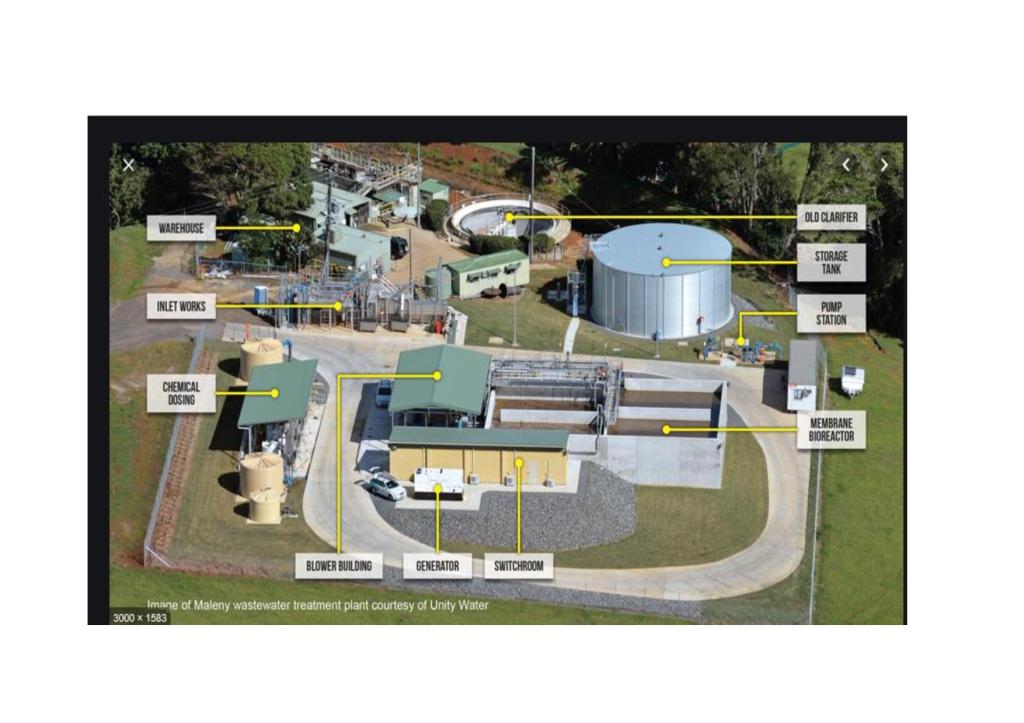
Lets look at one of these types, for example: tertiary treatment. Now that we know tertiary treatment refers to chemicals what sort of chemical could we examine? It so happens that I have one in mind lets examine DETERGENT. I know what you’re thinking.. that stuff that makes your eyes sore and you need plenty of ventilation for.. Yes! However, its also a chemical nightmare if not treated by our amazing wastewater facilities. To examine just a couple of the amazing properties; Phosphates – Linked to cardiovascular disease, osteoporosis and death, Formaldehyde – Used to preserve dead bodies, ohh and by the way it increases your risk of cancer.
“Formaldehyde is so harmful that the EPA calls it a ‘B1’ which means it is probably carcinogen when in contact with skin. This is what is being flushed down the toilet and into our treatment plants. “
However, detergent is only one of the many examples I shudder to think of in the realm of all the other chemicals and carcinogenic or lift threatening materials can be found both physically and biologically we often miss when examining what goes through our treatment facilities.
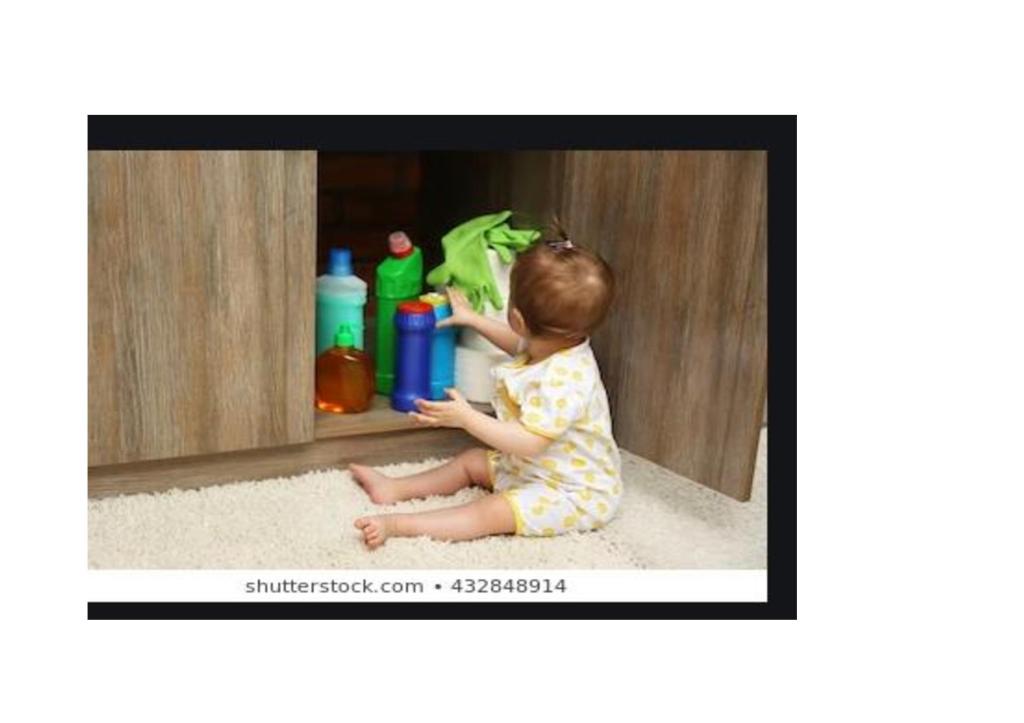
So with chemical treatment out of the way, what about the other two issues of physical and biological treatments or better still prevention? I mean I could discuss Sediment and membrane treatment over at the wastewater facility. Hell! I Could even have a cuppa with you over Biological treatment options like raingardens or even sprout Acronyms like: A20, MBBR, or TPAD. However, the only Acronyms that I think really could rock this forgotten boat are: SDG’s and SCSA.
“Thanks again for asking, yes SDG means I’m referring to Sustainable Development Goals and SCSA I’m referring to School Curriculum Standards Authority. “
But Wait! What do they have to do with a solution? Well haven’t you heard the saying, “prevention is better than the cure?” Getting students thinking, learning and discussing these issues from the time they enter primary school through to University or Tafe can be a way of unlocking many taken for granted issues and misconceptions about wastewater. I think it’s imperative we get kids asking the questions of what can we do for our part to help with SDGs for the future. Heck I’d love to see it offered as a subject in both middle and senior high school as both an ATAR and non-ATAR subject. This is an area where I think kids should be taken off to wastewater facilities and physically shown what the future of sustainable water consumption and supply is all about and get them engaged and passionate about the topic. So lets take more ownership over this topic.
#GET(Y)OURSHITTOGETHER
This is an example post, originally published as part of Blogging University. Enroll in one of our ten programs, and start your blog right.
You’re going to publish a post today. Don’t worry about how your blog looks. Don’t worry if you haven’t given it a name yet, or you’re feeling overwhelmed. Just click the “New Post” button, and tell us why you’re here.
Why do this?
The post can be short or long, a personal intro to your life or a bloggy mission statement, a manifesto for the future or a simple outline of your the types of things you hope to publish.
To help you get started, here are a few questions:
You’re not locked into any of this; one of the wonderful things about blogs is how they constantly evolve as we learn, grow, and interact with one another — but it’s good to know where and why you started, and articulating your goals may just give you a few other post ideas.
Can’t think how to get started? Just write the first thing that pops into your head. Anne Lamott, author of a book on writing we love, says that you need to give yourself permission to write a “crappy first draft”. Anne makes a great point — just start writing, and worry about editing it later.
When you’re ready to publish, give your post three to five tags that describe your blog’s focus — writing, photography, fiction, parenting, food, cars, movies, sports, whatever. These tags will help others who care about your topics find you in the Reader. Make sure one of the tags is “zerotohero,” so other new bloggers can find you, too.


 YouPutWHATInY(our)water?!?

