Business Case – “The Floating Island”
“Saving our planet, lifting people out of poverty, advancing economic growth… these are on and the same fight. We must connect the dots between climate change, water scarcity, energy shortages, global health, food security and women’s empowerment. Solutions to one problem must be solutions for all.” –Ban Ki-moon
Welcome back to another edition of Ecological Engineering Talk. Today I would like us to take on a three scenario journey. To kick off (drum roll please).
Scenario 1) Man (lets call him Jack) in the eastern states of Australia goes to the toilet has a pee and is about to flush when he remembers that we are in the middle of a drought and the jingle “if it’s yellow let it mellow applies”.
Scenario 2) Wife Melinda in India walks over 1km with a 2 litre vase on her head to collect water from the only clean lake within the ascribed radius.
Scenario 3) Daughter Cindy has to work an extra job on weekends due to the increasing cost of the water bill for her household.
Now I ask the most obvious question… What do these three scenario’s have in common? Had your moment? Great! The answer is WATER! In all of these scenarios we have the common issue of water being available. Whether its through accessibility or the economical cost it all comes back to the same problem. Now I will open this blog with a question. What does having access to and affordable water mean to you?
What is the problem of water quality and scarcity and why should I care?
In the past (say 1970’s) the issue of water scarcity might have involved a conversation a little like this – “So mate what do you think about the water levels in the Dwelling up dam?” The response might look like this – “Are you high mate? Why would I care? There’s plenty of water in that dam!” Now this argument may have some prudent points, as the rainfall trend between 1979-2003 seem to be flat if not slightly increasing (see image below).
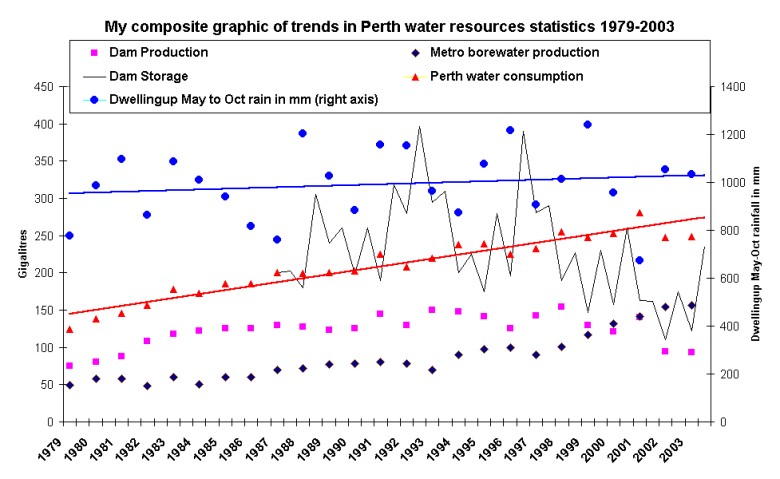
However, if we were to have that same conversation with what we know now about the supply of water being met with a significantly higher consumption rate (nearly doubled since 1979) we might be alarmed. How can we flatten the water consumption when the population is increasing? I really wish this was an isolated case; however, some sobering facts come to light about water!
Numero Uno: The annual cost of water shortages in Australia’s economy equates to $323 Billion dollars! To put a little more flare and context into the argument lets consider the fact that a 2 Trillion dollar business called the global beverage business, which relies on?! You guessed it water!
Numero Dos: According to World Vision 844 million people lack access to clean water. To put that into context that’s nearly 1/7th of the worlds population!
Numero Tres: The World Health Organisation (WHO) sites that 829,000 people are estimated to die from diarrhoea as a result of unclean drinking water each yet. A further study by WHO found that in 2017 alone 220 million people required treatment for schistosomiasis (a chronic disease caused from parasites found in infested water).
The third point (Tres) is actually a problem that one of the richest men in the world (Bill Gates) is trying to tackle. So if a smart businessman like himself see’s the value why can’t we? After all, just in those three examples we can see: health, economy and society brought into a problematic reality.
So to sum this all up I would like to throw another word into the equation which covers what was discussed above and more, “Environmental Capital”!
Environmental Capital and it’s Benefits
According to an article written by Newson and Chalk (2004), to implement sustainable development three main elements need to be considered, being: ecosystem understanding (including indigenous knowledge), economic evaluation of environmental assets and widespread participation. So this brings me to my point just what is Environmental Capital? Well, if we use its formal definition we find that it is the countries total renewable and non-renewable resources found through Natural Capital (Environmental Assets). To formalize all of this it is seen that Natural capital (which interchanges with Environmental Capital) is all our natural resources which the Earth provides which has an assigned financial value. So just what are the benefits of having Environmental Capital?
Well a great example I found on this was from an article written by Clarkson and Richardson (2004), where their studies unveil from a sample of companies an interesting discovery. It found that through capital expenditure utilized in protecting the environmental (i.e. reducing pollution which links to Natural/Environmental Capital) over a long term period had financial benefits not shared where high polluting firms did not.
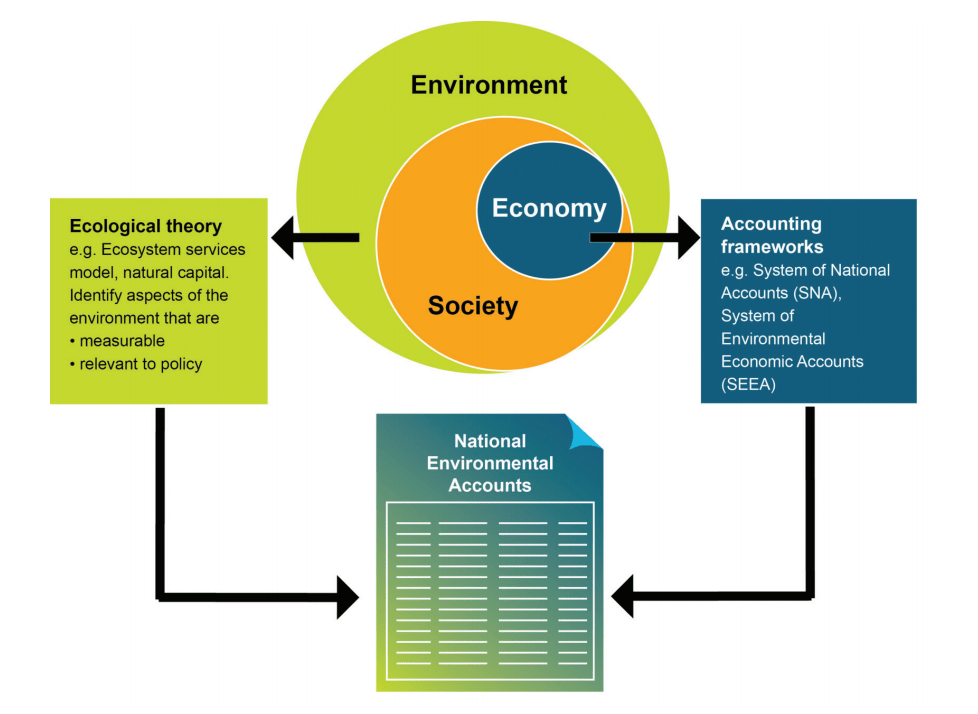
Speaking of Benefits… what about the importance of Environmental Capital in relation to SDG’s? Well as previously mentioned in my other blog, SDG’s are the goals we set to combat the issues of Social, Economic and Environmental Issues which are represented from SDG 1 through to 17. Since water and the sun provide the basis of Energy for life on the planet it would be remiss not to acknowledge the goals set forth by the SDG’s. However, the biggest issue and the beneficiary, if Environmental capital is invested in: is SDG 2 – which aims at ending world hunger, achieving food security and improved nutrition which can only be truly achieved through? You guessed it, clean water.
Introducing the business case of the Floating Island
The Floating island was an idea that initially was developed by a Mr Bruce Kania back in 1999. He thought that in the US there had to be a better approach to improving the poor water quality particularly since his dogs like to play in the water bodies.
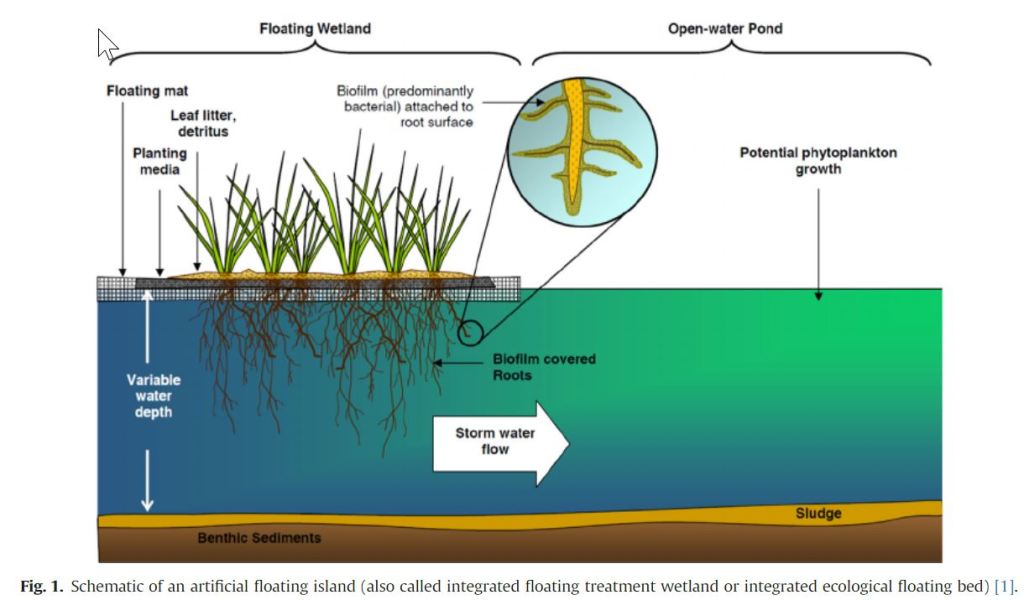
Now that I have informed you of its origins, what about its benefits? Well two of the main benefits of the Floating Island are the improved water quality and diverse habitat. This is done through the use of plant root systems which can effectively break down stratified water bodies into homogenized water sources.
A study by Lu, Ku and Change (2015) supports this assertion when their results indicated a overall improvement of water quality and a reduction of Phosphates as well as Nitrogen (which is harmful to humans at very high levels) and chemical oxygen demand.
The other important study is the relationship between the floating island and the environment. A paper published by Yeh et al. (2014), discusses the positive relationship that is built within ponds, lake and reservoirs where storm water treatment is tackled by the use of Floating islands where the root system soaks up the harmful bacteria as nutrients. This allows for livestock and other ecological lifeforms previously deterred by water bodies due to pollutive activities to return to the area which ties into the concept of replenishing our Environmental Capital.
Social, Economical and Environmental Benefits of a Floating Island
As previously mentioned there are two main issues facing society, being: Water Scarcity and Water Quality. So this begs the question of how is this all interlinked? Well I’m glad you asked… So I feel in exploring an answer to this, we need to use a little common sense. Clean water is used in a variety of applications, from the fish tank all the way to the isolated lakes found on farms for livestock. Which by the way creates to businesses both large and small of agriculture and pet shops respectively that contribute financially as well as socially to the community benefiting the Economy at large.
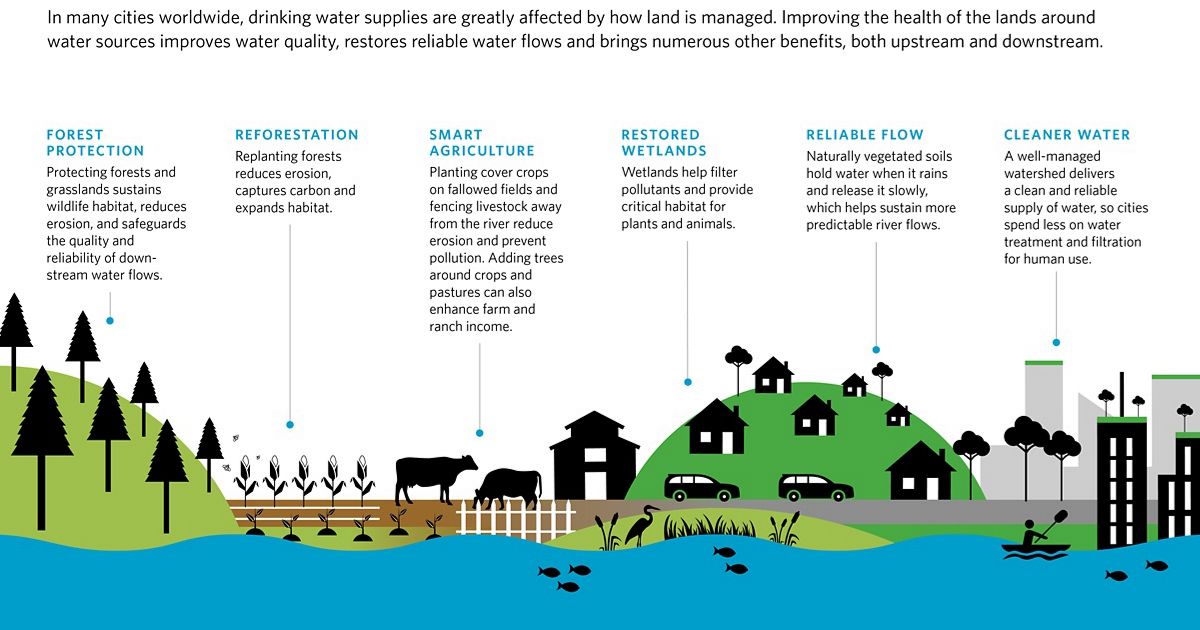
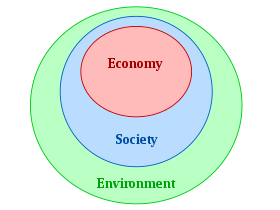
But wait! That’s not all… what about the environment. Well just look around, do you honestly believe that seagulls drink salt water? Or do you believe that the a freshwater lobster lives in a polluted water body? The web of connections that water creates transcends just one aspect of the three spheres of live (Economy, Society and Environment). Which brings me to my main point, why bother with Floating Islands? My response is forthcoming in saying… why not? We have an increasing issue of scarcity and we are using nature which doesn’t require a DC (power source to run which create increased water bill costs), can accommodate for changes in temperature and weather patterns which acts as a water purifier $$FOR FREE$$, hell we should be shouting this solution from the roof tops!
I mean after all India, that’s right India is looking heavily into floating islands to combat its issue of polluted water bodies and not just to decrease algae, Nitrogen and Phosphate. So if we can harmonize an idea like this for livestock and fish farms why not make it applicable for us too?
The Floating Island Checklist against SDG’s and Native and Traditional Cultural Learnings (NTCL)
Through all of this talk about business cases, profits, cost reduction and Environmental Capital we still need to acknowledge in more depth the SDG’s and NTCL’s. Through looking at the flow on effects of utilizing Floating island we can gain a perception on the impact we are having specifically with SDG’s. Specifically following on from SDG 2, we can also see that other sustainable goals are being achieved, and so I have decided to provide a summary on some of the ones that stood out to me:
SDG 3: Good-Health and Wellbeing – Floating islands are creating clean water and reducing the effects of dysentery (no shit right?)
SDG 6: Clean Water and Sanitation – Floating islands primary purpose it to reduce the pollutants in water to create homogenous water bodies
SDG 9: Industry, Innovation and Infastructure – By using Floating islands I believe we are creating innovation for the Industries (both agriculture and business in general) in the form of generating Environmental and financial Capital
These are just three out of the many SDG’s a Floating Island Ecological Engineering project would address; however, that is not to say there aren’t many others that are addressed to benefit the environment…. The last point I’d like to make on SDG’s is how using the business case for a Floating island would also address the issues of meeting a complex demand by nature by using nature as the engineering tool. Furthermore nature is adaptive and if preserved growing and resilient, so say goodbye to the issues of meeting the demands of a growing population. If we can create more water bodies using this Ecological Design who’s to say we can create water more water bodies with floating islands to benefit environmental and humanitarian demands?
This brings me on to my next point of NTCL and how the Floating Island can achieve the ideals set forth. In my previous blog I referred to Professor Walley and his interpretation on Indigenous/Native Cultural perceptions on the wildlife and their role as being selfless conservators. So to check whether I believe these concepts are addressed I decided to summarize as follows:
- Floating Island prioritizes the wellbeing of a previously polluted water body to its natural state.
- Through using plants, the carbon footprint is being reduced and nature is providing an environmental and ecological contribution.
- Using plants to purify water and reduce contaminants helps foster an abundance of wildlife/ecosystems to return to a once barren waterbody.
So by using a plant based solution to man made issues, we can see a balancing of the scales so to speak. We are creating biodiversity and furthermore creating a side benefit/partnership between the environment and human resources/natural capital. However, it should be noted that the later point does not exactly align with NTCL its affect and outcomes do.
Conclusion
The aims of this blog were to explore not only a business case for a Floating Island for purifying water bodies but to also outline the important relationship the ecological and environmental sector plays in our economy. There is a strong link between the areas of Economy (i.e. Bills, Financial Growth), Environment (i.e. Ecological, Plant Diversification) and Society (i.e. health, tourism) which is transcended by any one area the topic of water quality and scarcity. Through introducing an plant based (green solution) to a pollution problem we can begin to create new opportunities to help the wildlife but also the communities around the world. With that in mind I go back to my earlier question and replace it with another. Would you like a Floating Island?
#FloatingGreenBusinessCases
References:
Clarkson, P. M., Li, Y., & Richardson, G. D. (2004). The market valuation of environmental capital expenditures by pulp and paper comapnies. The Accounting Review, 79(2), 329-353. Retrieved from https://search-proquest-com.ezproxy.library.uwa.edu.au/docview/218551678?accountid=14681
Lu, Hsiao-Ling, Chen-Ruei Ku, and Yuan-Hsiou Chang. “Water Quality Improvement with Artificial Floating Islands.” Ecological Lu, H., Ku, C., & Chang, Y. (2015). Water quality improvement with artificial floating islands. Ecological Engineering, 74, 371–375. https://doi.org/10.1016/j.ecoleng.2014.11.013
Malcolm Newson & Liz Chalk (2004) Environmental capital: an information core to public participation in strategic and operational decisions—the example of river ‘Best Practice’ projects, Journal of Environmental Planning and Management, 47:6, 899-920, DOI: 10.1080/0964056042000284893
Yeh, Gary & Yeh, Pulin & Chang, Yuan-Hsiou. (2015). Artificial floating islands for environmental improvement. Renewable and Sustainable Energy Reviews. 47. 10.1016/j.rser.2015.03.090.
 YouPutWHATInY(our)water?!?


